How single-sided power meters quietly skew aero test results
Why dual-sided power meters matter for aero testing
The results from an aero test are only as good as the sensor inputs. Garbage in, garbage out, as the saying goes. The aero sensor is the obvious one. It's the device measuring drag in real time, and there are several products on the market that accomplish this. Each has its own strengths, and we picked the one that fits our work. But there's a second sensor doing equally important work that often gets overlooked: the power meter. Some are known to be more accurate than others. Top-tier units claim ±1% accuracy and hold close to that across temperature, cadence, and pedaling style. Lower-end meters sit at ±2% or worse, and the gap widens further when calibration has drifted, batteries are aging, or the unit hasn't been zeroed in a while. And that's before you even get to single-sided versus dual-sided. If yours is single-sided, the CdA number you walk away with has a built-in ceiling on how trustworthy it can be, no matter how good the rest of the equipment is.
This post is about the limitations of single-sided power meters, how power meter accuracy ends up shaping the CdA number we provide you, and why we reach for Favero Assioma when a client needs a power meter for a session. Plus, exciting news: ILE is now an authorized Assioma dealer.
How an aero test works
Outdoor aero testing works by riding a known segment at a steady speed, recording everything that affects the rider's energy balance, and back-solving for one unknown: your aerodynamic drag area, expressed as CdA (this is typically shown as just a number but technically has units of m²).
The math is cleaner than most people expect. Total power going into the bike has to equal the power lost to aerodynamic drag, rolling resistance, gravity, and acceleration. Three of those four are measurable or known: rolling resistance from the road surface and tire choice, gravity from elevation change, acceleration from speed change. What's left is the aero term, and that's the one we solve for.
Power is the input that everything else gets compared against. If your power number is wrong by 2%, your CdA number is wrong by roughly 2%. There is no software fix for bad power data.
What single-sided power meters miss
A single-sided power meter measures the torque applied to one side, multiplies by two, and reports that as your total power. It assumes your left and right legs contribute equally.
That assumption is almost never true. Most cyclists sit somewhere between 48/52 and 45/55 on left-right balance. Some are more uneven than that, especially if there's a history of injury, a leg-length discrepancy, or one-sided strength asymmetry. For a rider with a true 47/53 split, doubling the left-side reading produces a 6% underread on total power.
If your balance were a fixed 47/53 every time you rode, a single-sided meter could be roughly calibrated around it. But it isn't fixed. Balance shifts with fatigue (the stronger leg picks up more work as you tire), between road and TT positions (different hip angles load different muscles), with cadence, and from day to day.
For everyday training, this is mostly fine. You're tracking trends in your own data and the bias is roughly consistent. For aero testing, it's a real problem.
Why this breaks aero tests
Aero testing is about quantifying gains. A position change can save 10 to 30 watts at race pace; a good helmet swap, 5 to 10. Within those tests, we're often deciding between options that differ by just a few watts. Detecting those small differences is where power meter accuracy earns its keep.
Now picture a helmet test. On run 1 with helmet A, your L/R balance is 49/51, roughly even. On run 2 with helmet B, your balance shifts to 47/53. A left-side meter just told us you produced about 4% less power on run 2, even though your total power output was identical. Your right leg simply did more of the work.
The math then attributes those phantom watts to aerodynamics. Helmet B looks faster than it really is. You go home with a recommendation that doesn't match reality.
With a single-sided meter, the L/R balance shifting between runs adds noise on top of whatever real differences in drag exist. For something like a helmet test, that noise is largely random and would eventually average out if we ran enough trials. We don't have time for that in a real session. For position changes, the problem can be worse: balance often shifts systematically with hip angle or saddle position, so the bias doesn't average out at all. A dual-sided meter handles both cases by removing the noise source entirely.
What dual-sided meters do differently
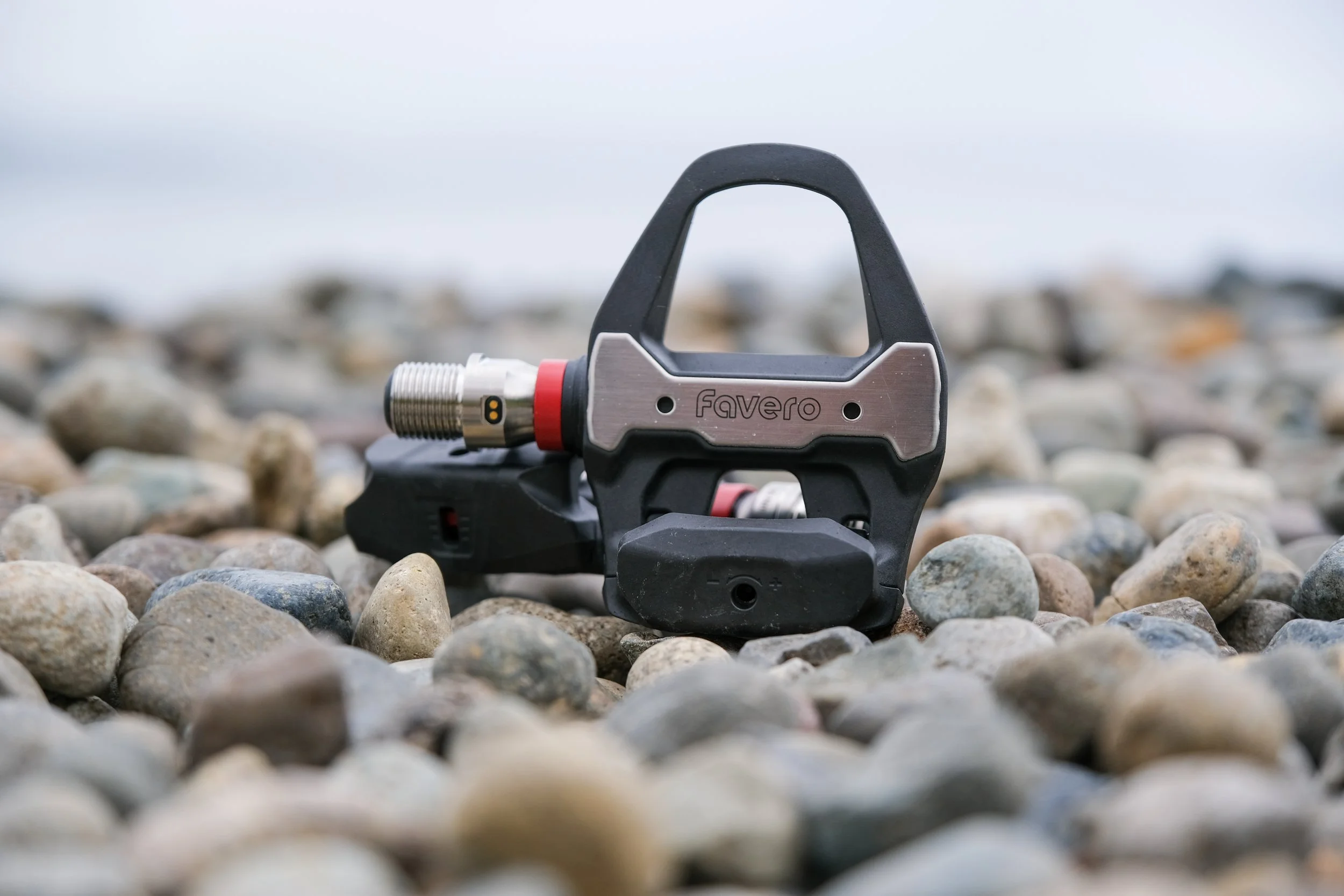
A dual-sided meter has its own sensor on each side. There's no doubling, no estimation, no assumption about symmetry. Whatever your L/R balance is at any given moment, the total adds up correctly.
In practice, this means we can run you through different configurations and the power signal stays clean across all of them. Your balance can drift between runs and the math still works. The CdA differences we measure between configurations are real differences in drag, not artifacts of how your legs were sharing the load that day.
For us, this isn't a "nice to have." Accurate power measurement is essential to what we do at ILE.
Why we use Favero Assioma
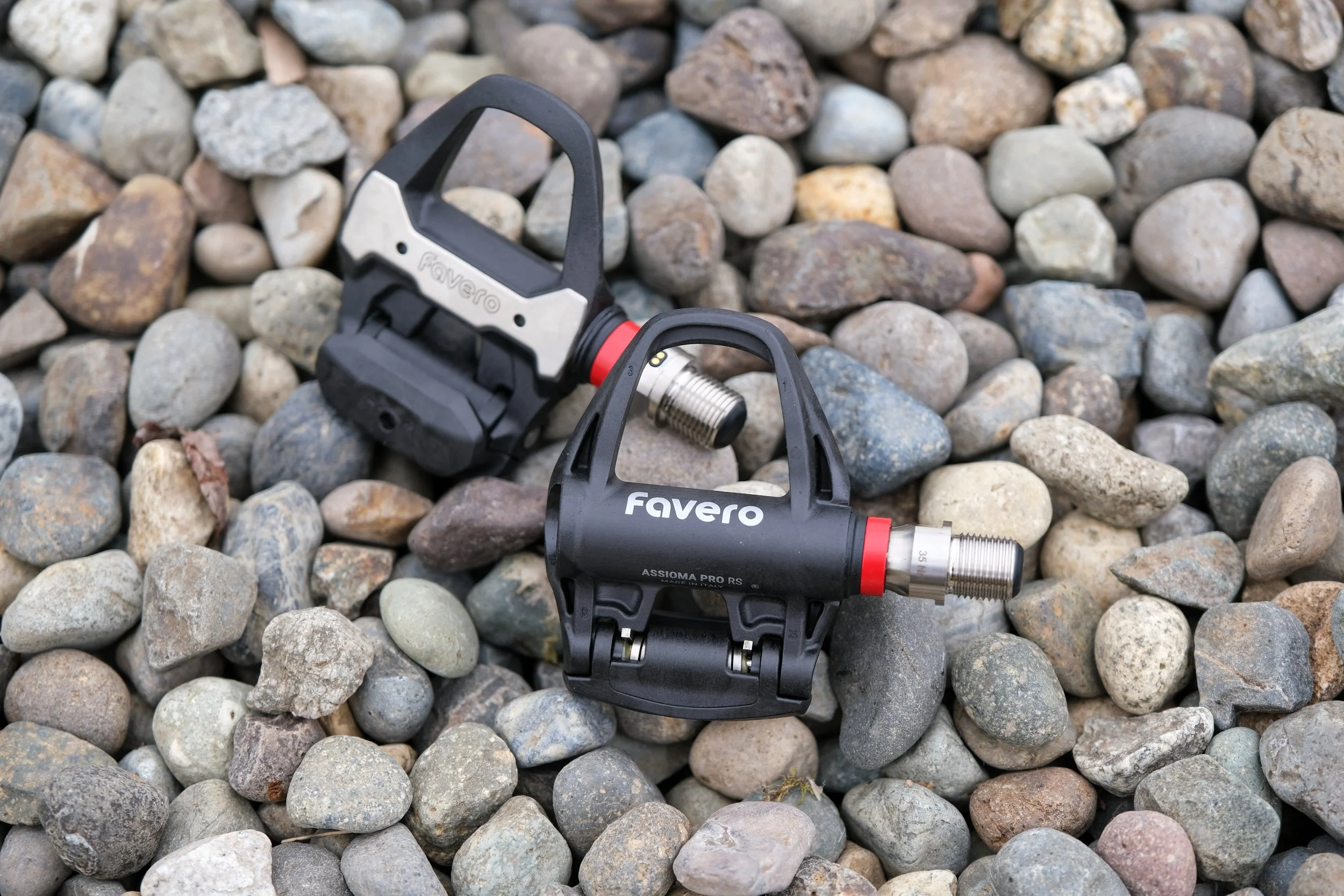
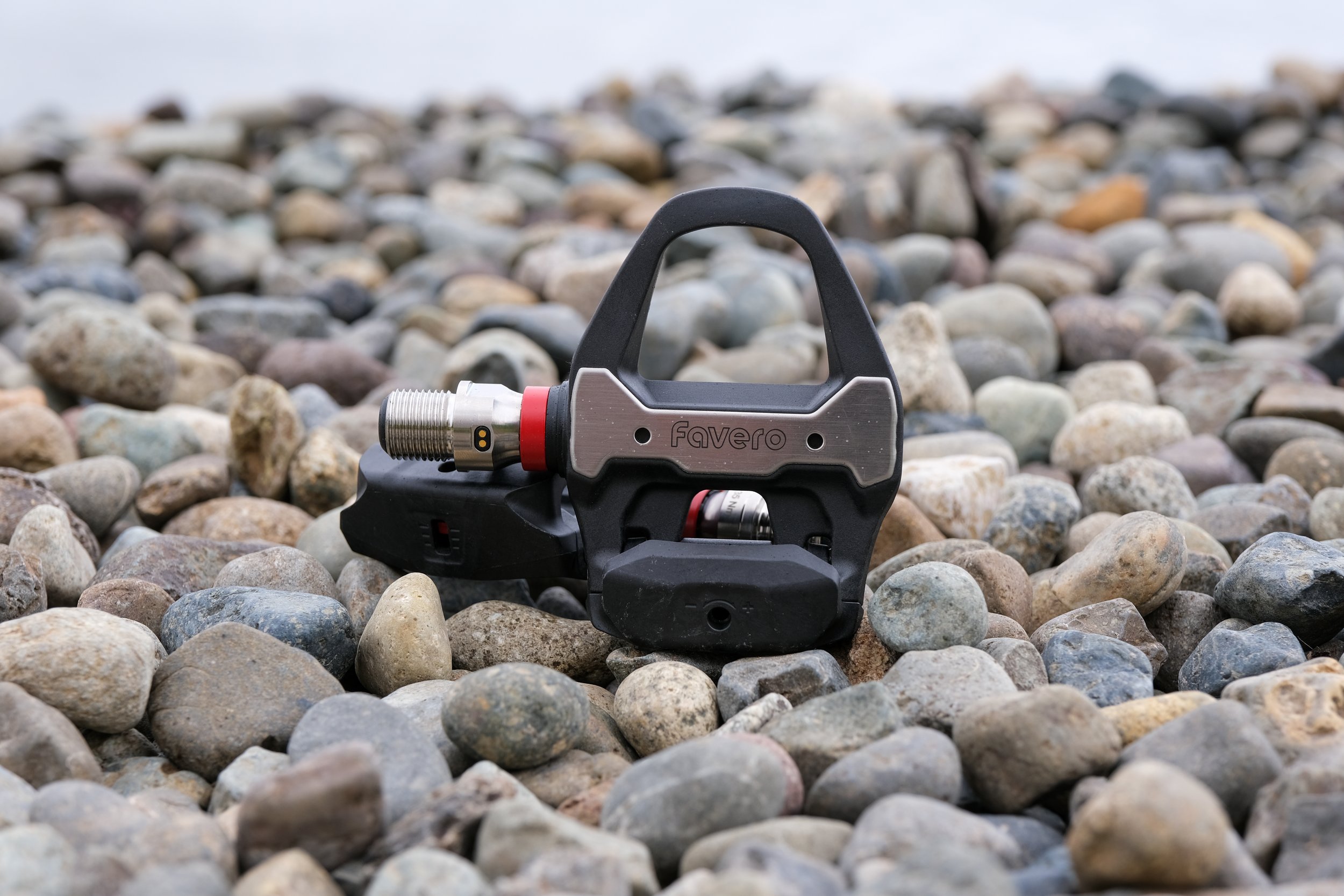
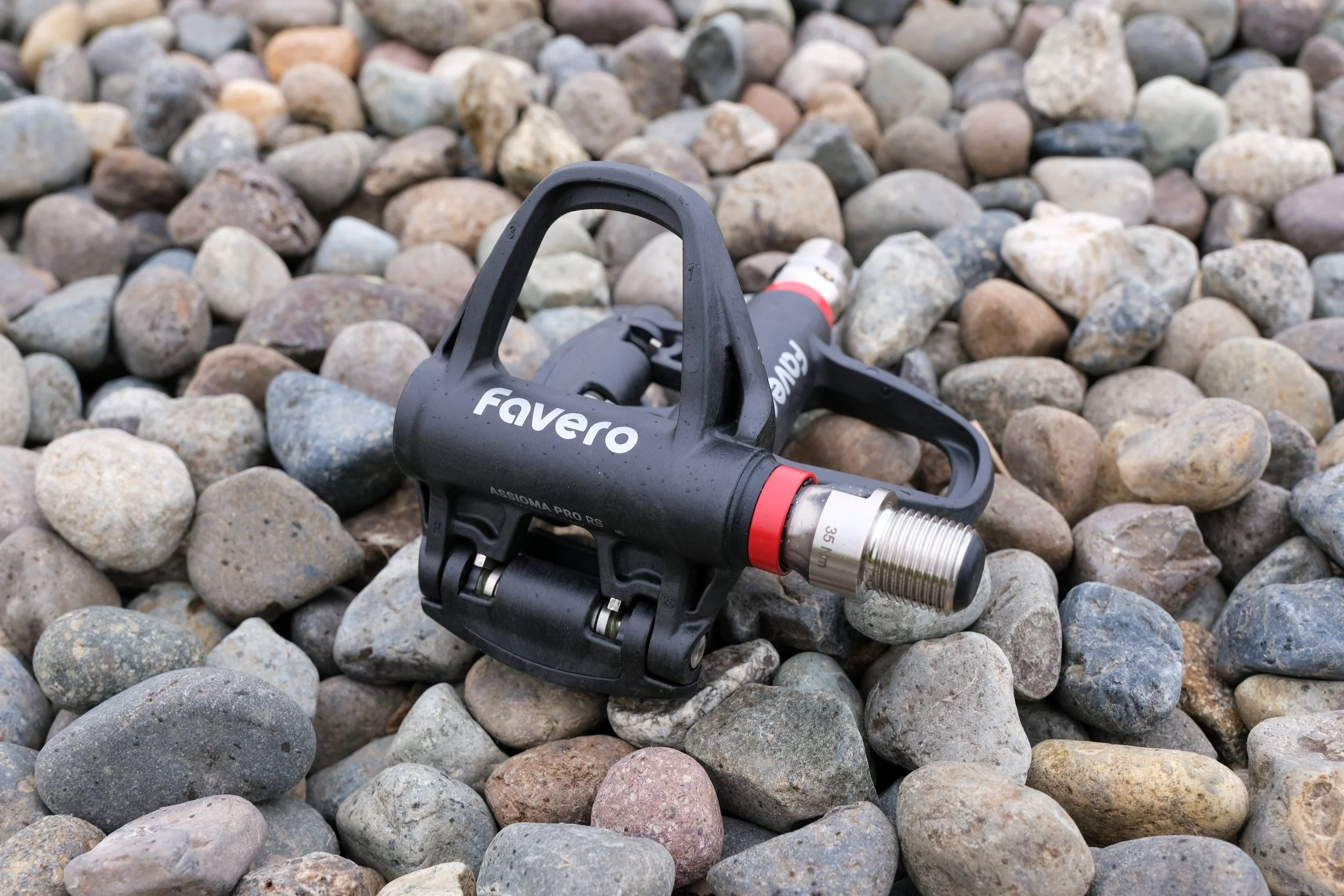
Favero Assioma has been our preferred power meter since day one. When a client books a session and doesn't already have an accurate dual-sided meter installed on their bike, we bring a set of Assiomas and run them for the test.
A few specifics worth calling out:
Independent strain gauges in each pedal, ±1% claimed accuracy, true dual-sided measurement
Pedal-based, swap between bikes in about two minutes, useful when we're testing one rider across multiple frames in a single session
Rechargeable internal batteries that have never died on us mid-ride
SPD, Look Keo, and SPD-SL cleat compatibility across the Assioma line
The hardware has handled weather, travel, and getting moved between bikes without complaint. We trust the numbers, which is the only bar that actually matters for test equipment.
ILE is proud to be an authorized Favero Assioma dealer
ILE is officially an authorized Favero Assioma dealer. Whether you ride road, time trial, track, or off-road, and whether you're buying your first power meter or upgrading from single-sided to dual-sided, we can get you pedalling any product in the Assioma line.
Email us at info@insidelineengineering.com and we'll get back to you with pricing and lead time.